
The jesters veil
“A brutally efficient vigilante hunts a ritualistic killer orchestrating Gotham's most grotesque murders—but each confrontation pulls them both deeper into a psychological war where the line between hunter and hunted begins to blur.”
Season Arc
A single escalating confrontation between an unstoppable force and an unmovable psychopath—a 30-minute descent into psychological and physical warfare that questions whether heroism can survive contact with pure theatrical madness.
Themes
Cast — 9 Characters
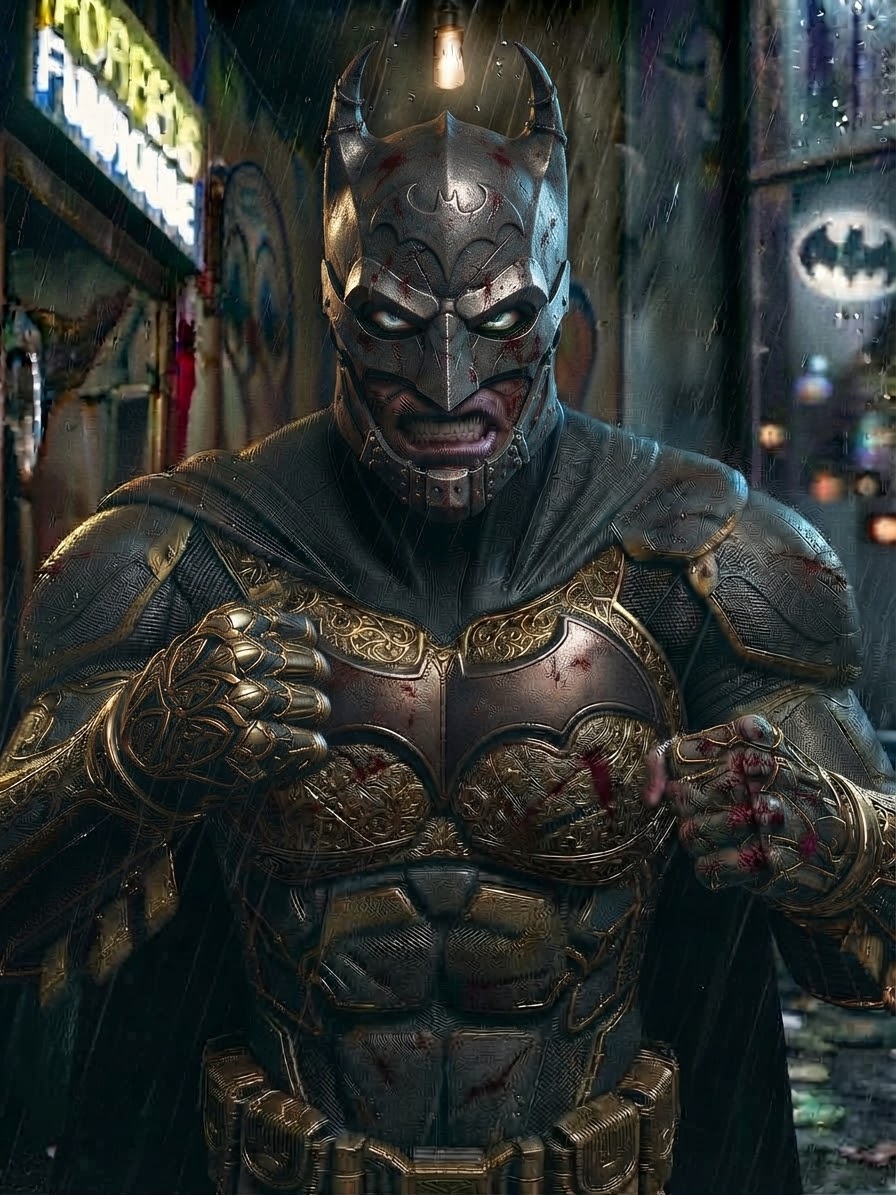
Thomas Wayne/Batman
protagonistthe avenging enforcerThomas’s crusade began after losing his son Bruce to systemic corruption and violence.After Bruce’s tragic murder He has spent decades perfecting both martial discipline and psychological warfare, becoming Gotham's most feared enforcer—a figure more myth than man.
To impose absolute order on Gotham's chaos, believing that only overwhelming force and unwavering will can protect the innocent from predatory chaos.
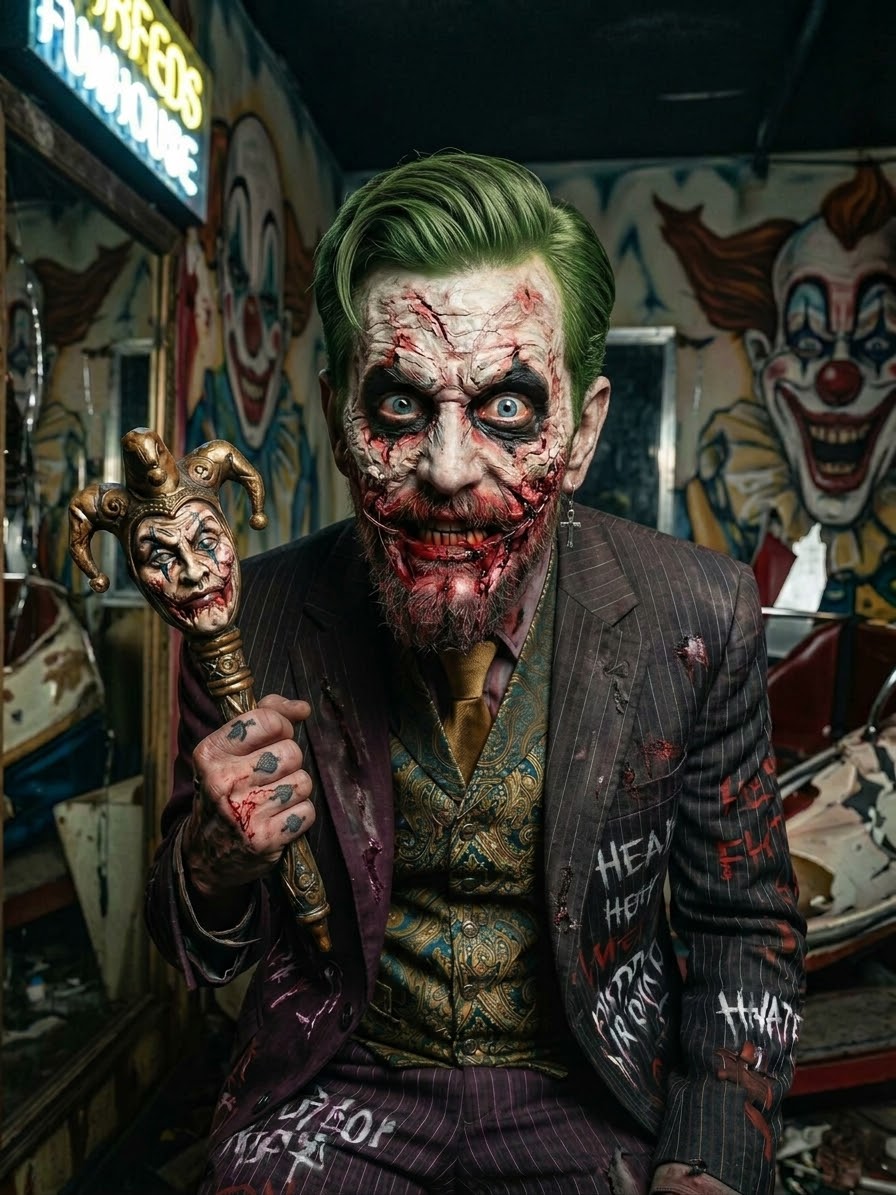
Joker
antagonistthe deranged visionaryOnce a celebrated stage performer whose career was destroyed by a catastrophic chemical vehicle fire he survived. Vincent becomes the sadistic clown menace known only as joker and sees his subsequent crimes as the ultimate performance art—a corrective masterpiece that transforms Gotham into his stage and its citizens into unwilling puppets in his chaotic world.
To prove that chaos is the truest art form, and that even legendary heroes are merely performers who can be broken, humiliated, and made to dance to his script.
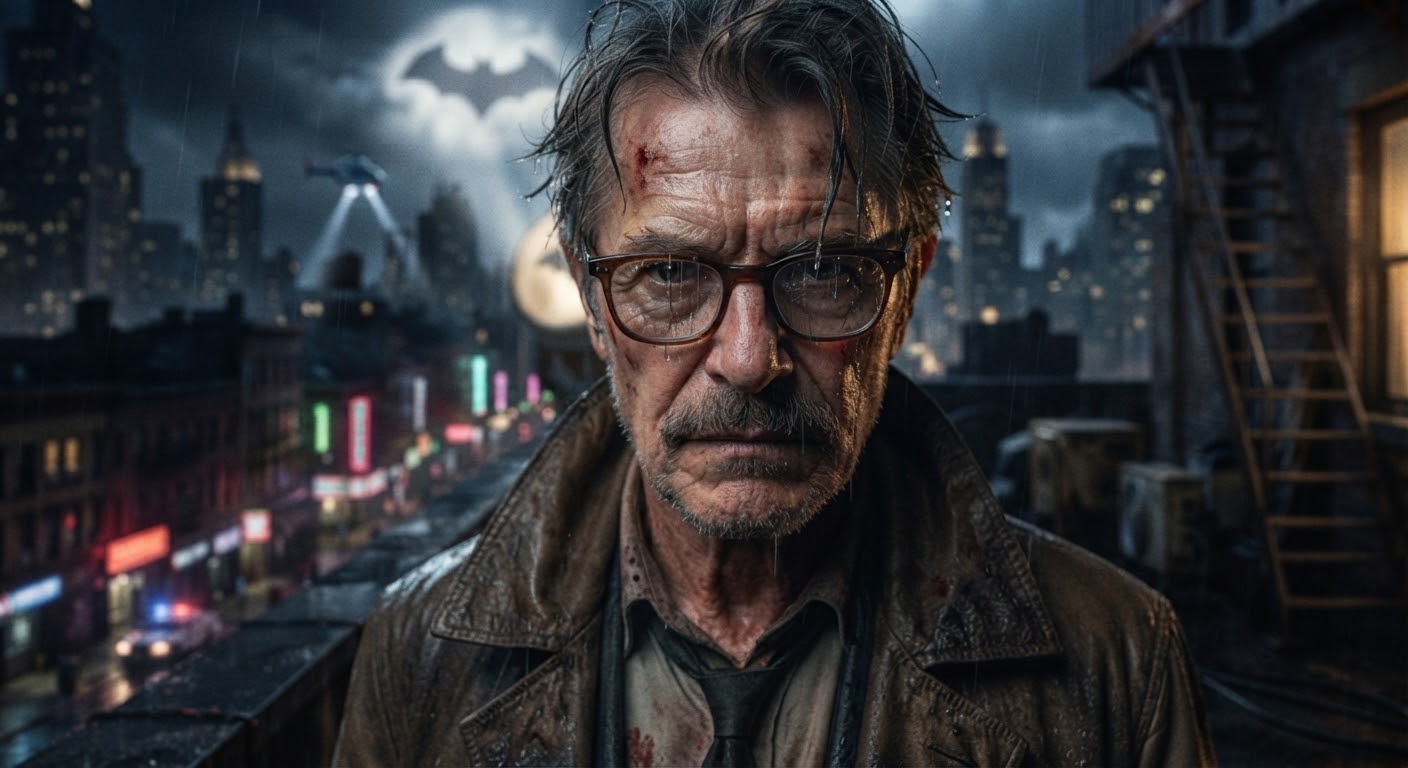
Commissioner James L. Gordon
supportingthe compromised authorityTheresa has spent 25 years in Gotham PD, watching the institution rot from corruption. She knows Batman is Gotham's only effective law enforcement, but the acknowledgment destroys her professional integrity.
To maintain her authority and dignity while privately seeking Batman's intervention, despite knowing it makes her complicit in vigilantism.
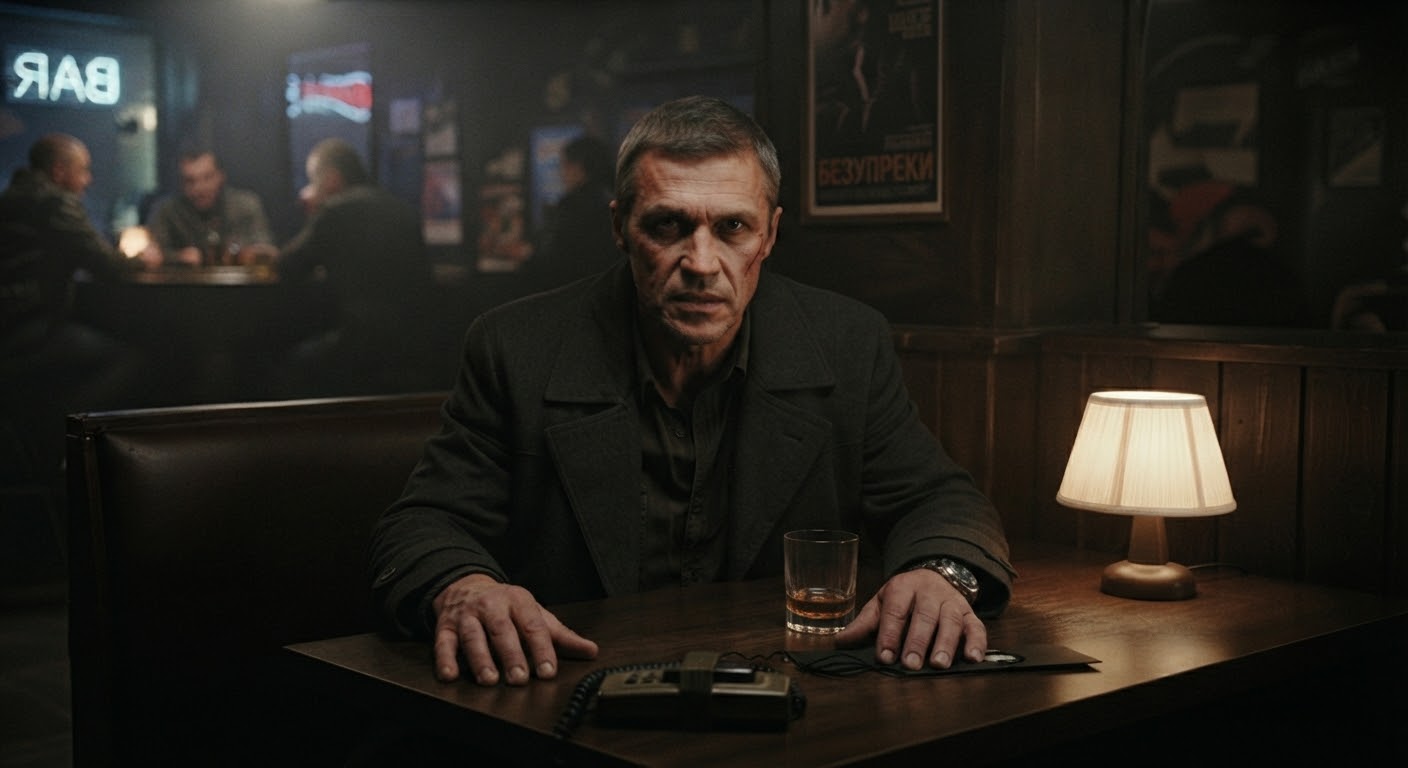
Dmitri Yasenko
supportingthe underworld informantOnce a powerful crime syndicate lieutenant, Dmitri now operates as an information broker, feeding intelligence to Batman in exchange for selective protection from Gotham's chaos.
Survival. Dmitri recognizes that Vincent's unpredictability threatens the delicate criminal ecosystem, and only Batman can contain the threat.

Dr. Margaret Chen
supportingthe forensic oracleGotham's chief medical examiner who has performed autopsies on Vincent's victims. Margaret's meticulous documentation of the killer's ritualistic methodology becomes Batman's primary investigative tool.
Professional duty and a desperate need to understand the psychology behind the murders, hoping her analysis will provide the key to stopping the killer.
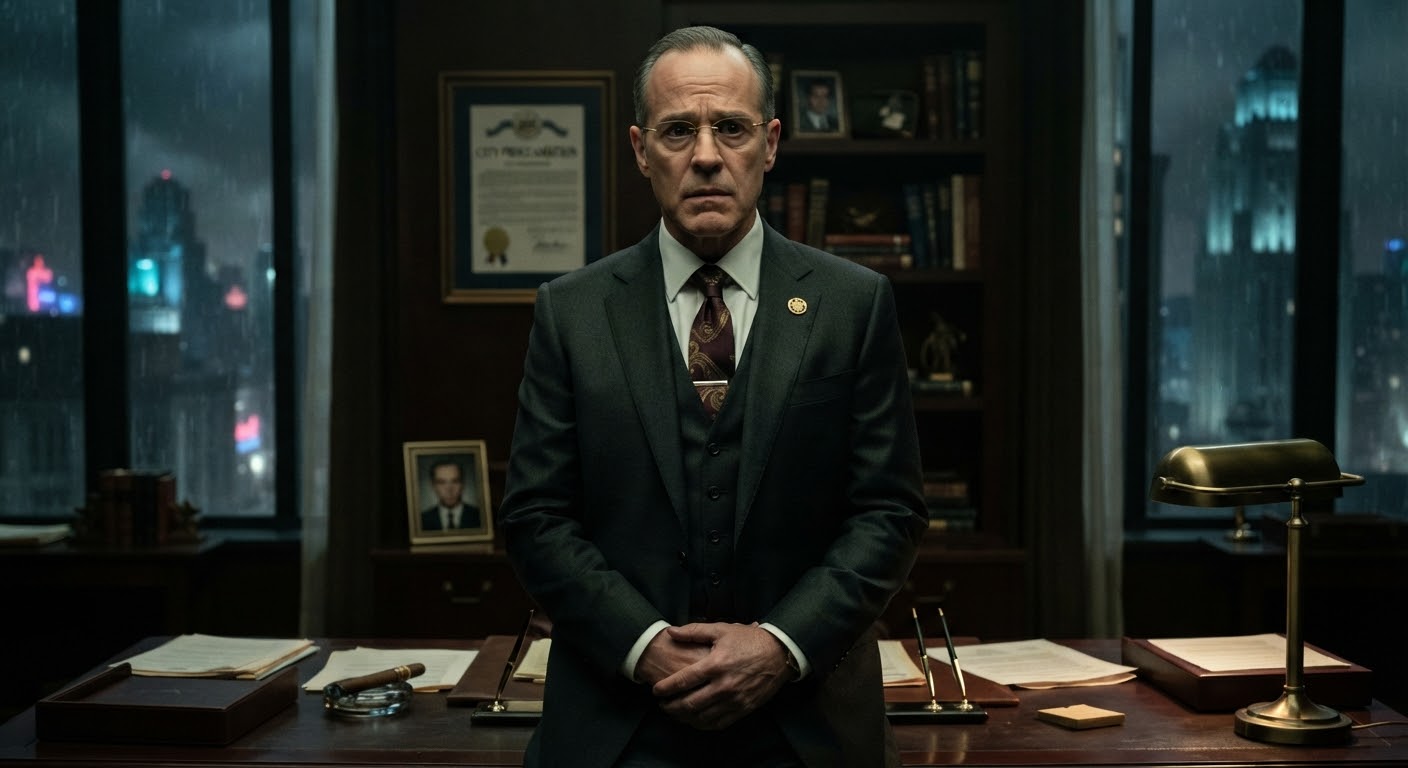
Roderick Hayes
supportingthe corrupted politicianGotham's Deputy Mayor, complicit in protecting criminal enterprises in exchange for campaign funding. Vincent's murders target Roderick's corrupt allies, making him both victim and reluctant witness.
Self-preservation. Roderick wants the murders stopped before his own corruption is exposed through the killer's theatrical revelations.
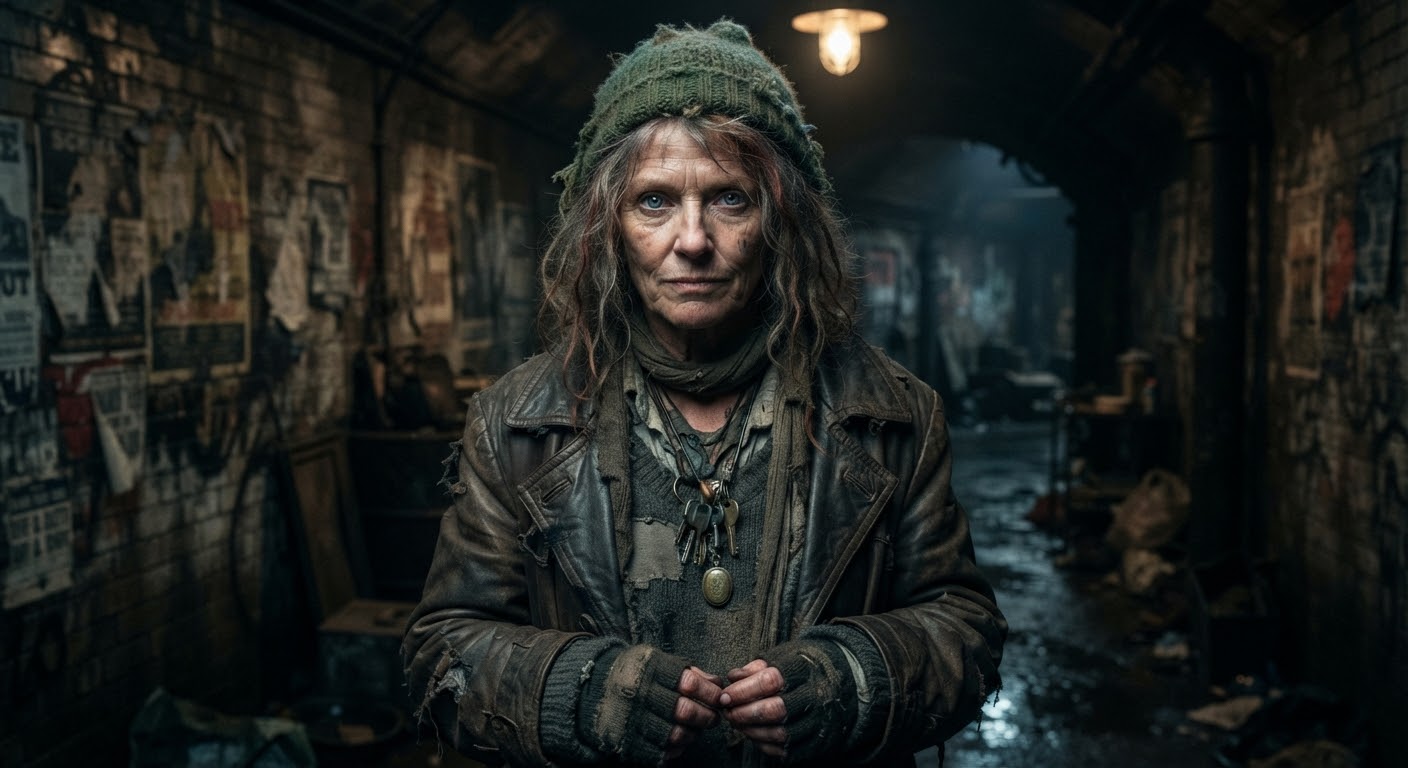
Siobhan Maguire
supportingthe street oracleA homeless woman with encyclopedic knowledge of Gotham's forgotten spaces—the tunnels, abandoned buildings, and hidden passages where both Batman and Vincent move through the city.
Protection of the vulnerable and a genuine desire to help Batman, having witnessed Vincent's cruelty firsthand.
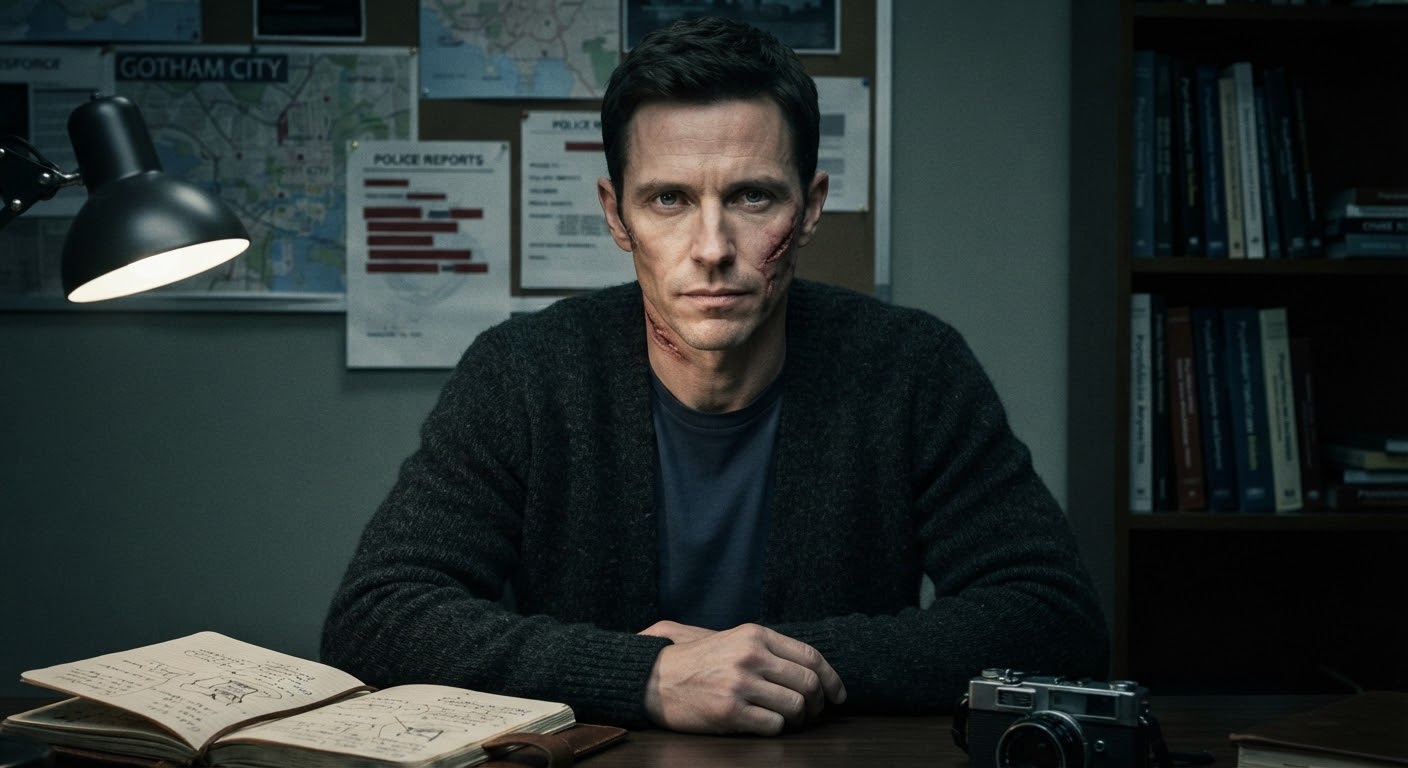
Franklin Moss
supportingthe tortured survivorA victim of one of Vincent's early 'performances' who survived. Franklin's recovery gives him rare insight into the killer's methodology and psychological patterns.
Redemption through helping Batman. Franklin channels his trauma into becoming an essential asset in the hunt, refusing to let Vincent claim total victory over his life.
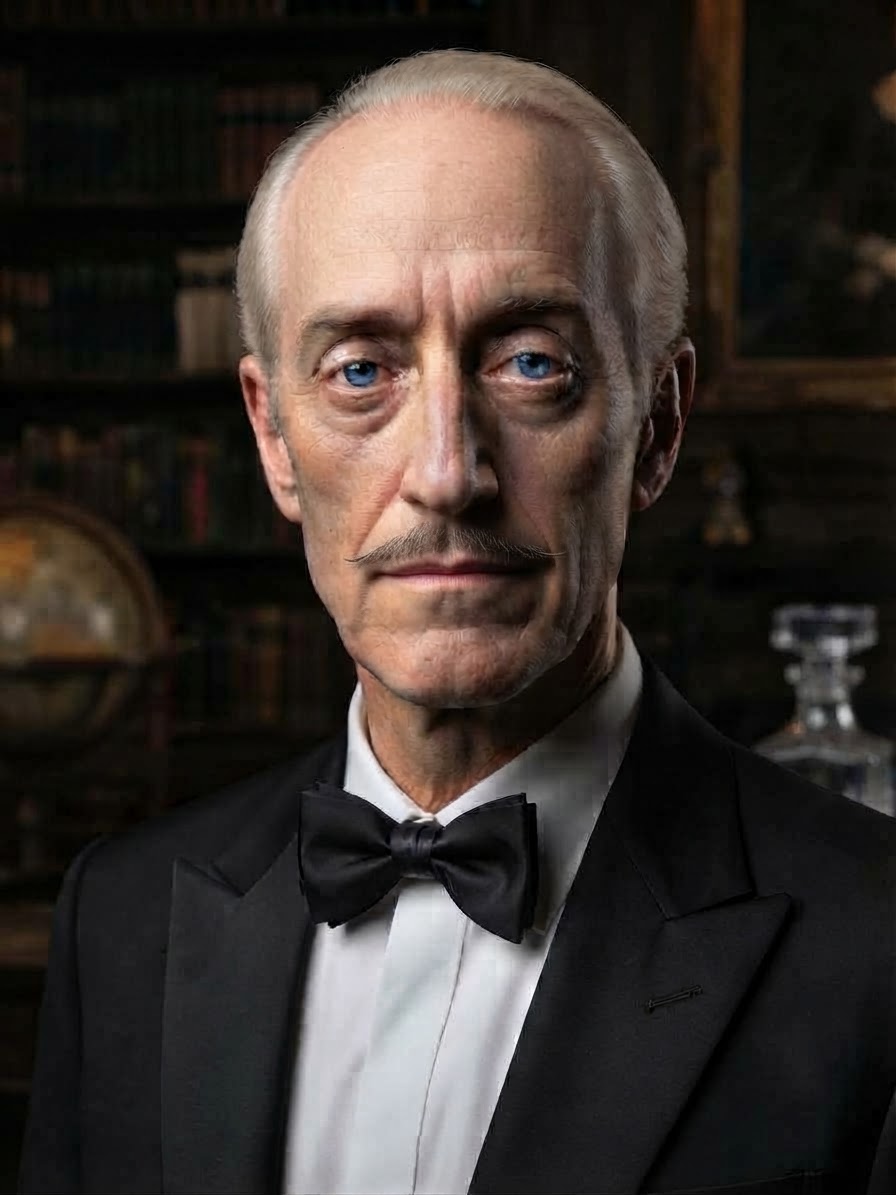
Alfred pennyworth
SupportingLong before trading the battlefield for the drawing rooms of Wayne Manor, Alfred grew up with a strict, disciplined British upbringing that steered him naturally toward service. He enlisted at a young age, quickly proving his mettle in elite, high-stakes military operations. Operating in the shadows during covert intelligence and special reconnaissance missions, he earned a reputation for maintaining absolute composure under fire, sharp tactical instincts, and an uncanny ability to improvise when things went sideways. The Turning Point & MI6 His exceptional capabilities caught the eye of British intelligence (MI6). During his years in intelligence, Alfred specialized in deep-cover logistics, counter-espionage, and close-quarters protection. It was an era of cigar smoke, classified briefings, pocket watches synced to the second, and deadly cold-war games. He learned how to handle adversaries not just with force, but with absolute precision, psychological insight, and unwavering discretion. Transition to the Manor A heavy personal toll and a promise made to an old friend eventually led Alfred to step away from government service. Seeking a quieter chapter, he accepted a position managing the grand estate of Thomas and Martha Wayne. When tragedy struck the Wayne family, Alfred’s role shifted from traditional butler to something much deeper: guardian, mentor, and steadfast anchor to a grieving young Thomas Wayne
In this timeline, the tragedy in Crime Alley didn't claim young Bruce—it claimed him. That single, defining night broke Thomas completely, transforming him into a ruthless, gun-toting vigilante. Alfred’s motivation shifts dramatically to match this brutal reality: Preventing Absolute Self-Destruction: Thomas isn't fighting to save Gotham with a code of mercy; he’s waging a bloody, terminal war out of pure grief and rage, slowly drinking himself to death and courting his own demise. Alfred’s primary motivation is to keep Thomas from entirely crossing the line into a monster, serving as the fragile tether holding what's left of the Wayne family name together. Carrying the Ghost of Bruce: Unlike the main timeline where Alfred protects Bruce in memory of his parents, here Alfred looks at Thomas and sees a grieving father who died inside that alley right alongside his son. Alfred stays out of a profound, heartbroken loyalty to the man Thomas used to be before the blood and the whiskey took over. Managing the War Room of a Wrecking Ball: In this reality, Alfred's military and intelligence background isn't just used to stitch up an idealistic crusader—it's damage control. He handles the logistics of a violent, unhinged vigilante, trying to steer the carnage just enough so that Thomas doesn't burn all of Gotham (and himself) completely to ash. He is the last remaining soldier standing watch over a burning estate.
Episodes — 1
The Overture
When an abandoned funhouse becomes the stage for a ritualistic murder that mocks Gotham's police, Batman emerges from the shadows to track a killer who is orchestrating something far more methodical—and personal.
Locations — 6
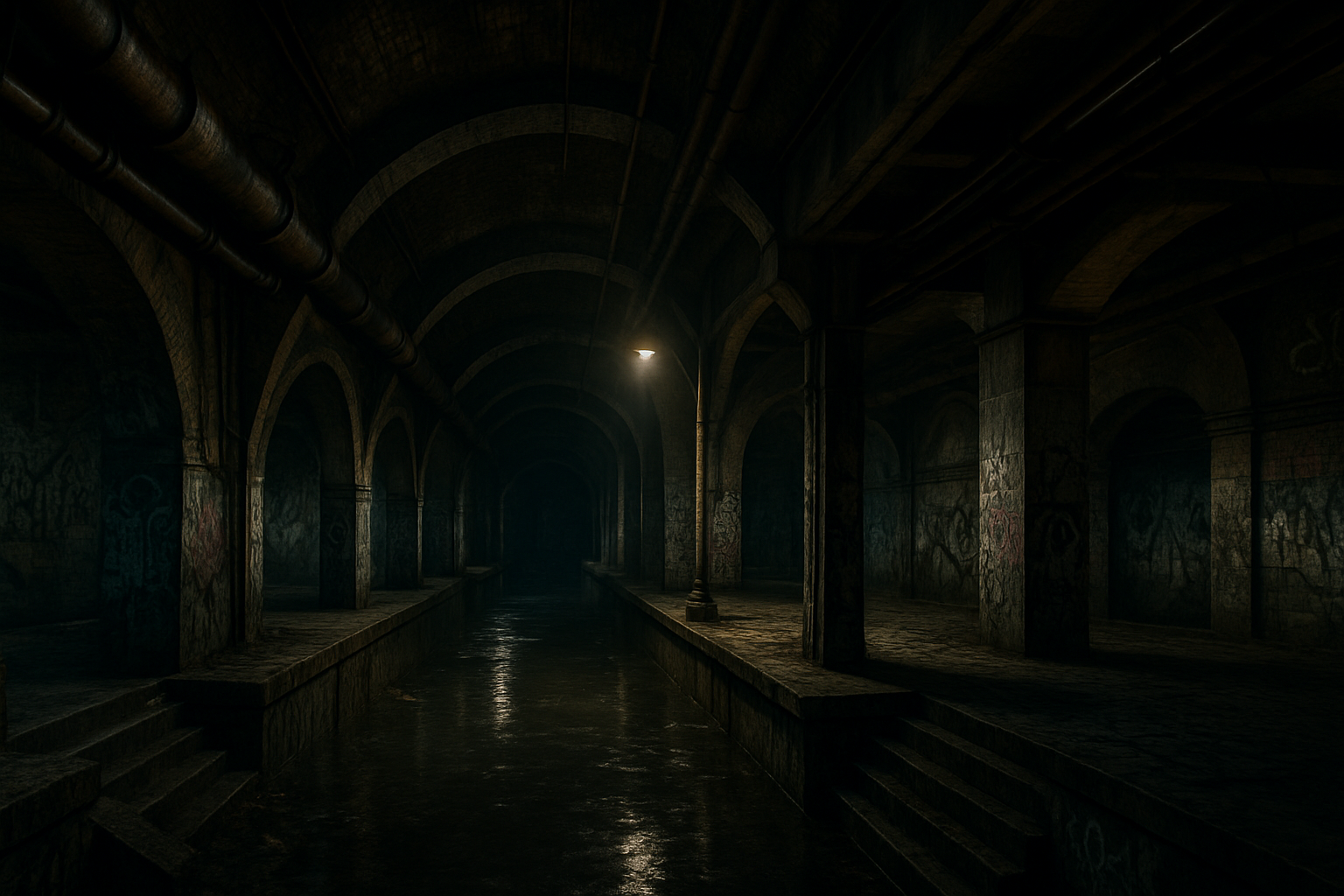
The Gotham River Tunnels
Labyrinthine dread, suffocating claustrophobiaA vast network of subterranean passages beneath Gotham's streets—abandoned subway stations, flooded maintenance tunnels, and forgotten infrastructure. Murky water reflects fragmented streetlight. Rusted pipes emit harmonic drones. Graffiti covers every surface in overlapping tags and ritualistic symbols. The architecture is a patchwork of eras—Victorian brick, mid-century concrete, modern steel reinforcement—creating visual chaos that mirrors the city's corruption.
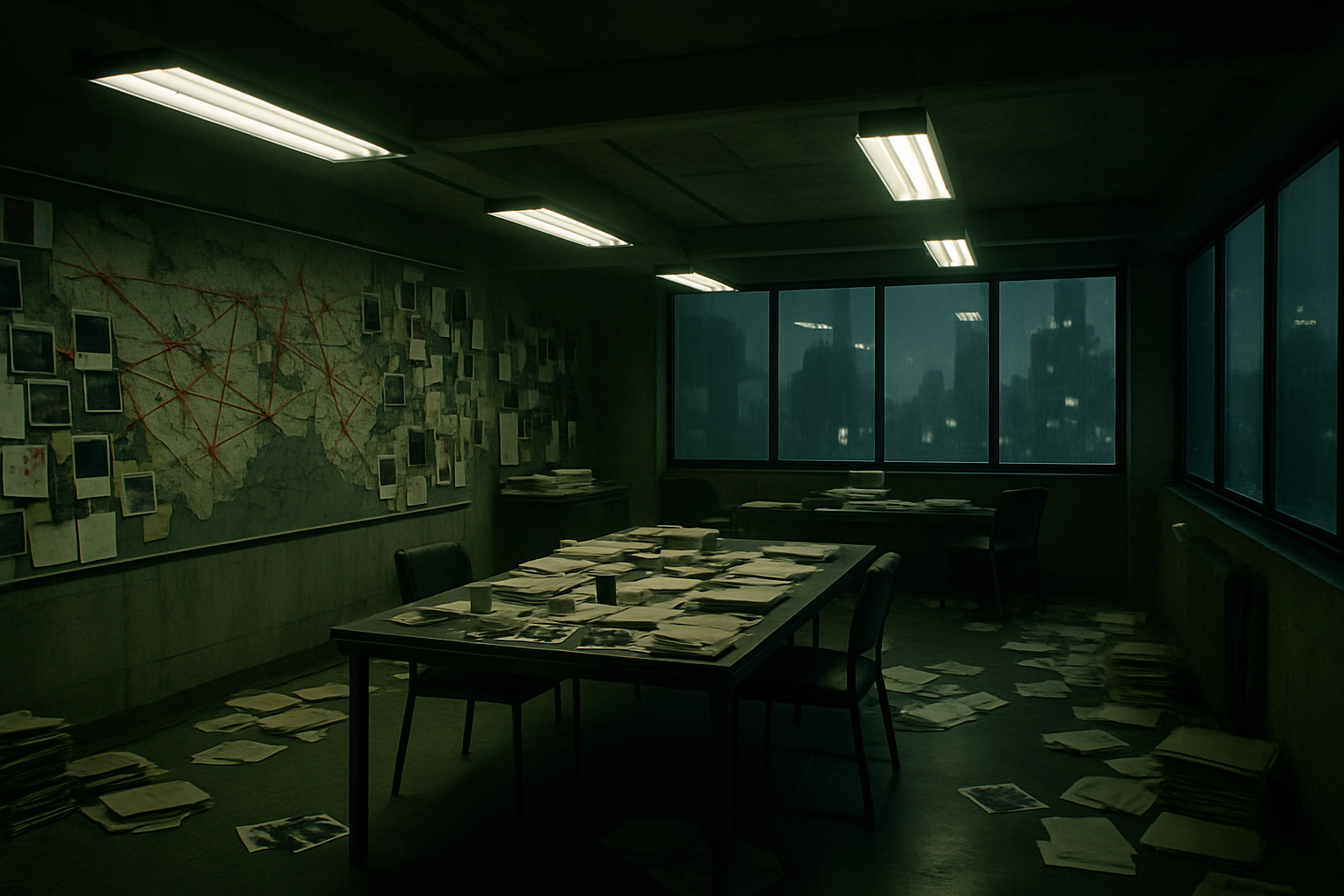
Police Headquarters Operations Center
Cold institutional failure, flickering desperationA brutalist concrete building's fifth-floor war room—harsh fluorescent overhead lights creating sickly green illumination over scattered crime scene photographs, physical evidence, and dozens of case files. Three walls are covered with a map of Gotham marked with red string connecting murder locations. Coffee cups sit cold and abandoned. Windows overlook the rain-soaked city below. The space feels cramped despite its size, suffocating under the weight of unsolved violence.
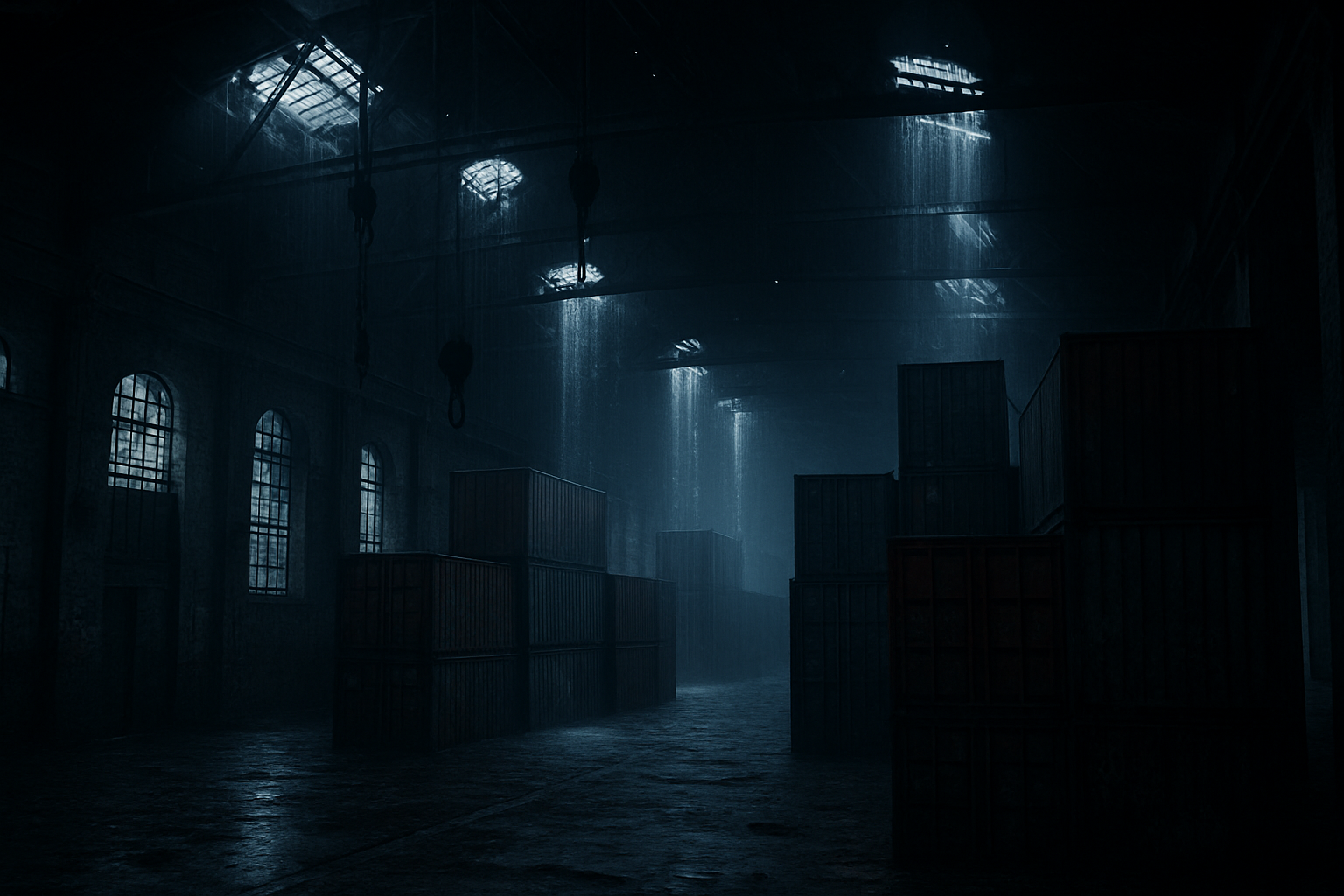
The Old Harbor District Warehouse
Industrial isolation, echoing abandonmentA massive converted shipping warehouse with soaring ceilings, exposed brick, and industrial infrastructure. Shipping containers are stacked like tombstones. Chains and pulleys hang from corroded beams. Rain pours through holes in the roof, creating columns of illuminated water in the darkness. The space is enormous and empty, creating a sense of profound isolation. Graffiti and decay suggest it has been abandoned for decades. It serves as Vincent's secondary performance space—a cathedral of desolation.
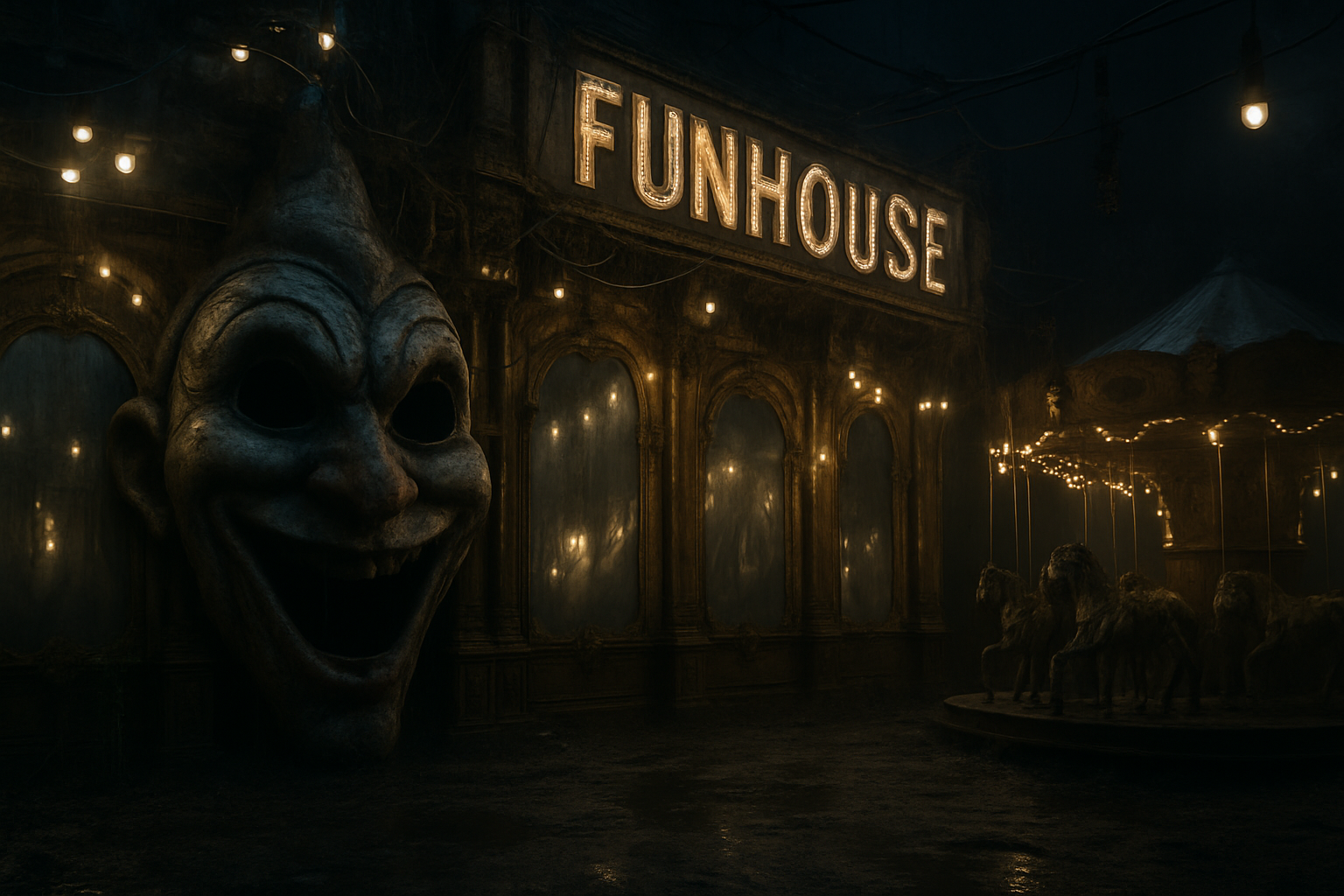
The Decadent Funhouse
Decaying theatrical danger, neon nightmareAn abandoned amusement park's central attraction—a baroque funhouse with peeling gilded mirrors, warped reflections, and flickering neon signs spelling out faded promises. Water drips through rusted machinery. The exterior is a grotesque jester's face sculpture with hollow eye sockets that serve as windows into the darkened interior. Theatrical stage lights rigged throughout create a sense of orchestrated performance. The carousel horses are skeletal and rotting, their paint chipped to reveal blackened wood beneath.
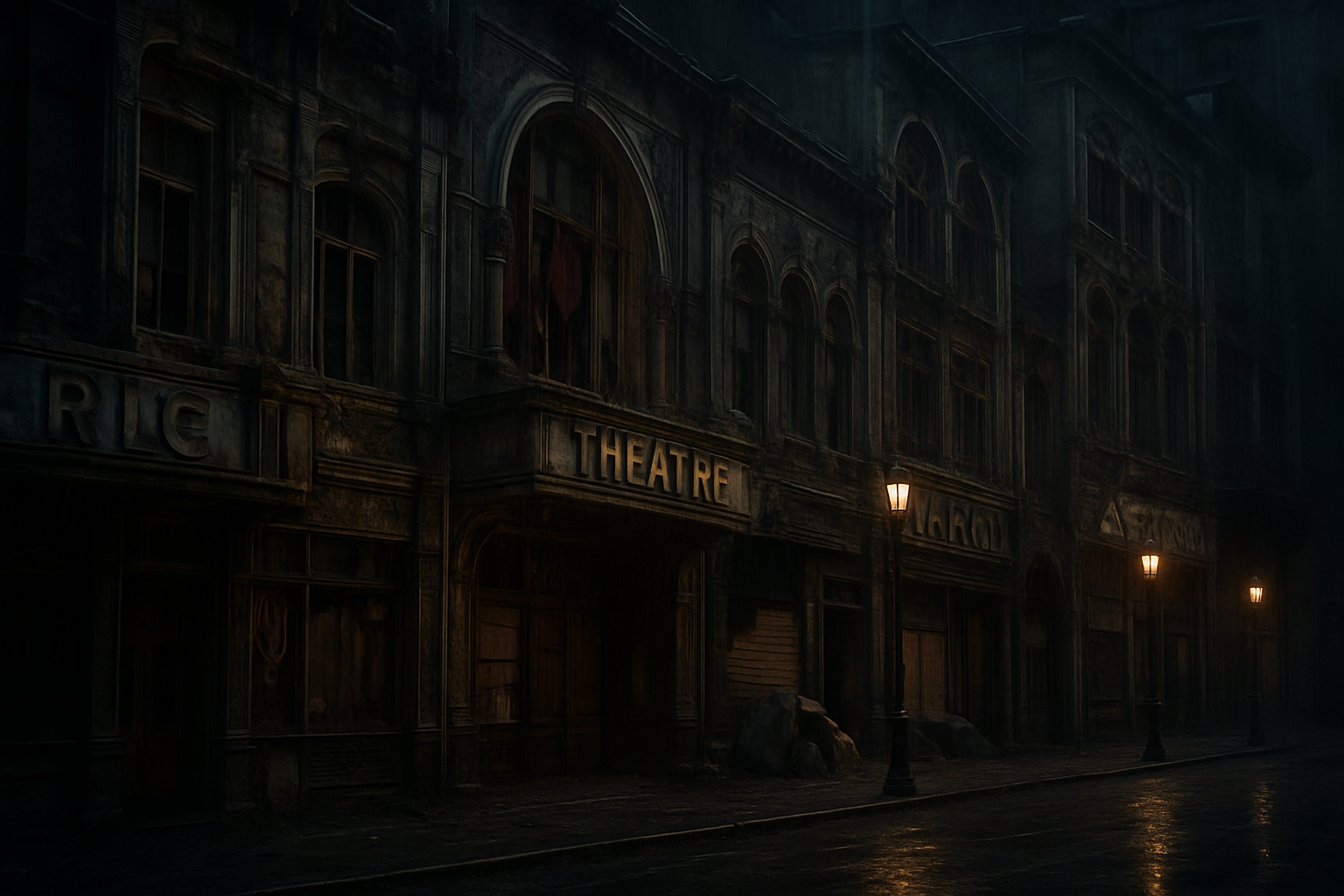
The Decaying Theater District
Baroque melancholy, operatic decayA rain-soaked block of abandoned performance venues—their marquees dark and missing letters, velvet curtains visible through broken windows, ornate facades crumbling under decades of neglect. Street-level storefronts are boarded up or converted into homeless shelters. Flickering gaslights create pools of amber illumination separated by deep shadow. The architecture is richly detailed but rotting—gargoyles eroded by weather, crown molding hanging loose, decorative iron corroded to rust-colored skeletal structures.
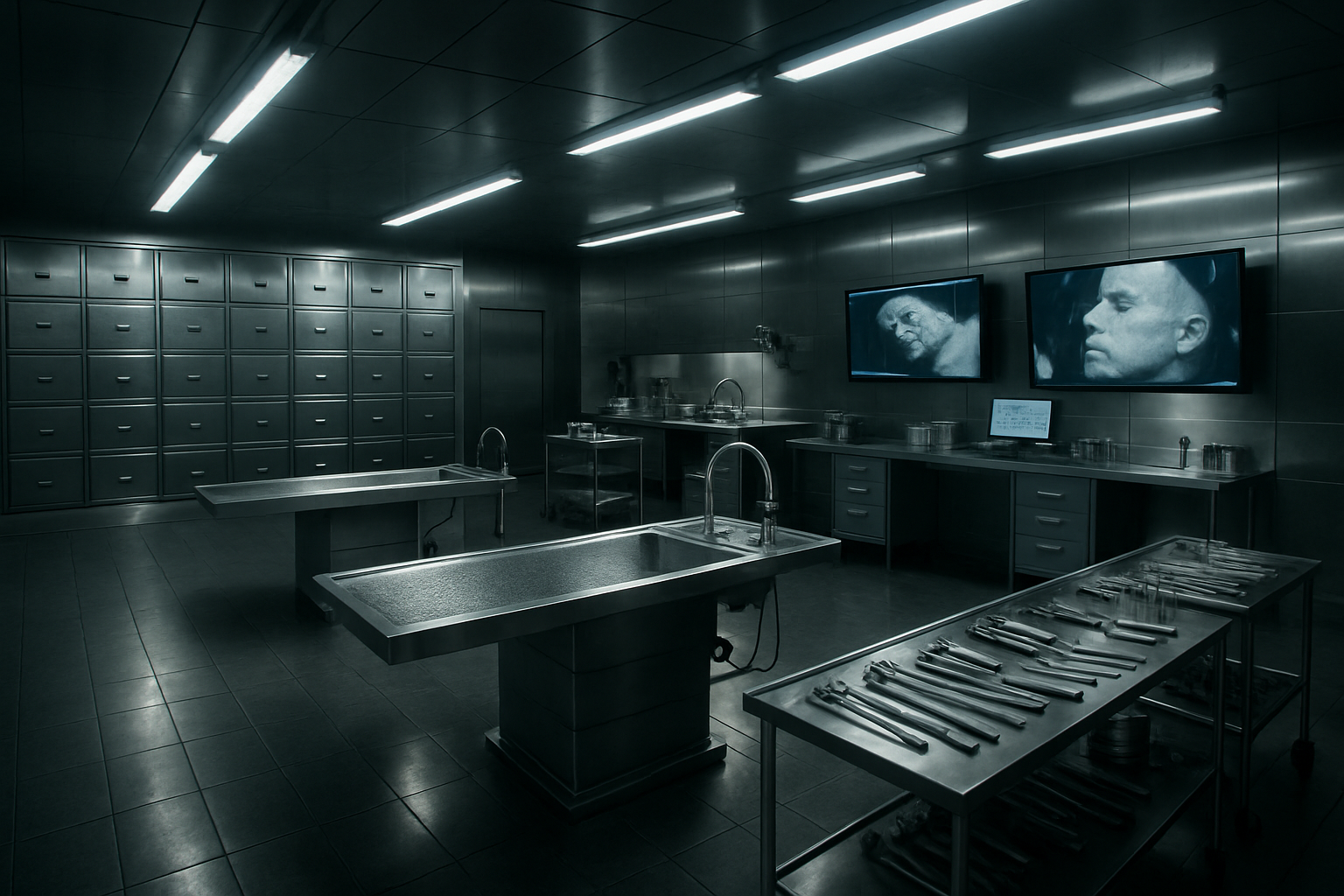
The Medical Examiner's Morgue
Clinical precision amid death, sterile theaterA subterranean facility of polished stainless steel and harsh white LED lighting. Rows of refrigerated body drawers line the walls. Autopsy tables are surrounded by precision instruments arranged with surgical exactness. Wall-mounted screens display forensic imagery. The space smells of antiseptic and formaldehyde. Despite the clinical perfection, it is a tomb—a space where Vincent's victims become evidence, data points in a larger pattern of theatrical violence.
Share
The Story Intelligence layer for AI entertainment